A Singapore Government Agency Website

When Work Stress Affects Your Family
Get practical tips to help you manage work-family conflict.

When Work Stress Affects Your Family

By: Dr Sherry Aw, Senior Lecturer (Psychology), James Cook University Singapore
Recommended for: Working adults
Topics: Work stress, family relationships, mental health, work-life balance, communication
30 Oct 2026 ⋅ 5-min read
Before You Read: A Quick Guide to This Article
Have you ever come home from a long day at work feeling stressed?
Have you ever snapped at your family?
If so, you are not alone. Dr Sherry Aw explains why work stress can affect your home life and what you can do about it. Psychologists describe this as "work-family spillover." This conflict can happen in three ways: (1) behaviour-based conflict - the way you behave at work does not fit well with family life; (2) time-based conflict - when work takes up too much of your time, even when you are at home; or (3) strain-based conflict - when the stress and worry from work affects how you feel and react at home.
Get practical tips to help you manage work-family conflict.
It’s 6:55PM on a Tuesday evening. You just got off the bus after an hour commuting from the office. You spent the journey thinking about an upcoming project deadline on Friday. Your boss’ feedback earlier requires substantial changes, and you foresee having to put in late nights for the rest of the week. Even then, you are worried you cannot make the deadline.
As you open the front door, the chaos of home hits you – “Kor Kor hit me!”, “She destroyed my things!”, “Can you both PLEASE eat your dinner!”; toy cars, animals, and a stray diaper litter the floor like landmines, clothes lie heaped on the sofa waiting to be folded, and in the background, the Wheels on the Bus go round and round and round. You join your family for dinner, trying to keep up with the three different conversations happening at once – the laundry schedule, sibling squabbles, and detailed reports of what one child ate in school that day. Just then, your Teams chat pings with an urgent query from your colleague. You fire off a quick response on your phone, when your elder child goes “Orh hor, no screens while eating!”
On any other day, you might have laughed and put the phone away. But today, for some reason, you snap at your children to be quiet and let you work in peace. Your spouse gives you a look that adds to the irritation (and guilt), and a hush falls over the dinner table (…the baby on the bus goes wah wah wah…).
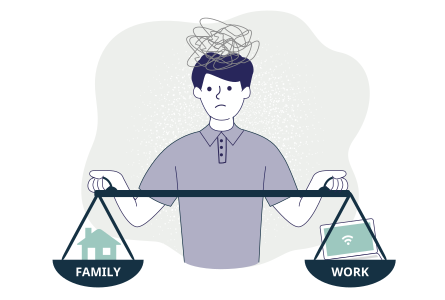
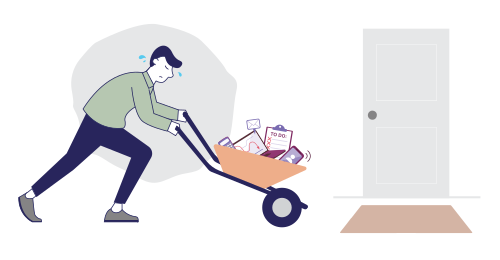
What happened here? It wasn’t just because your child was being cheeky; you've brought the office home with you, and now the whole house feels the tension. Psychologists call this work-family spillover, which refers to when events in the workplace affect our psychological states and spill over into the home. When this spillover leads to negative emotions and behaviour, this is known as work-family conflict.
Psychologists Jeffrey Greenhaus and Nicholas Beutell identified three main types of work-family conflict: behaviour-based, time-based, and strain-based conflict.
Behaviour-based conflict occurs when the mindsets and behaviours of one domain are incompatible with the other. For instance, while a focus on efficiency might be good at work, that same mindset is not likely to work with your children, who do things at their own pace. These conflicting expectations can lead to impatience and unhappiness with your child.
Time-based conflict arises when we just don’t have enough time in the day to manage our work and family duties, or when work and familial duties overlap in time.
The opening scenario shows how work messages and emails can easily intrude on family time, even after working hours. Such time-based conflict has become increasingly common due to our constant connectivity. We bring work home because work is right in our pockets. Work notifications can reach us at any time, our brains immediately switch to work mode (“just one last email”, “just one quick reply”), and work thus creeps into our family and personal time.
Finally, strain-based conflict involves psychological states – how you think and feel – which in turn influence your behaviours. Work stressors such as unfinished reports, performance pressure, and even unpleasant interactions with colleagues or supervisors can stay with you through the day. This makes it difficult to detach from work and reduces your emotional capacity to engage with your family.
On low strain days, a teasing remark from your child or spouse is just that. But on high strain days, when your mind is swirling with thoughts of unfinished work and emails, the nagging fear that you’re not up to the task, and the knowledge that you are going to have yet another late night trying to make some progress after the kids fall asleep (on a good day: 9PM; more likely: 11PM), the everyday chaos of home can be so overwhelming that this one passing comment is now viewed as criticism – that you are not modelling the right behaviour, that you are not present with your family – leading you to lash out.
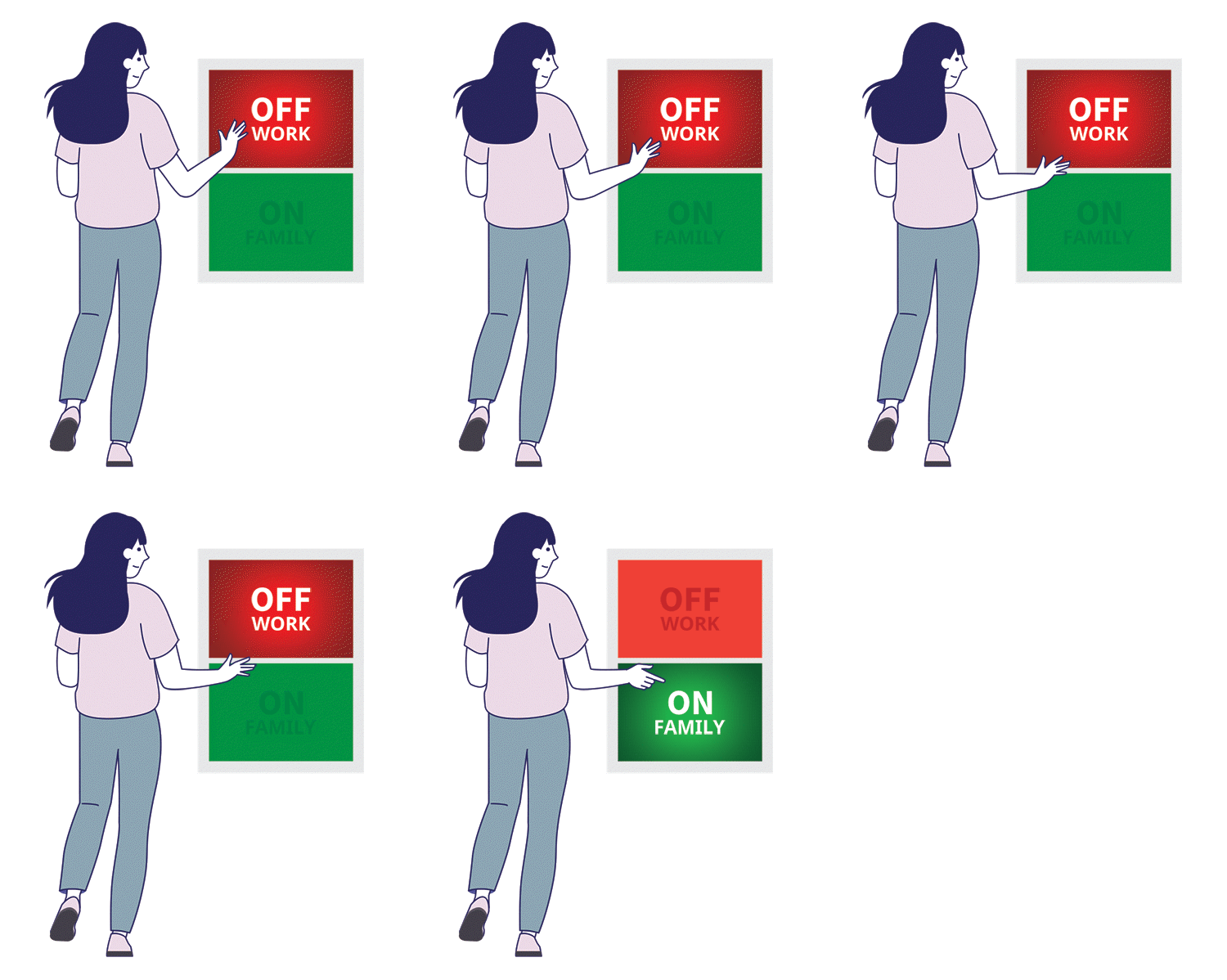
When you know how work interferes with family, you can find the right tools to reduce work-family conflict.
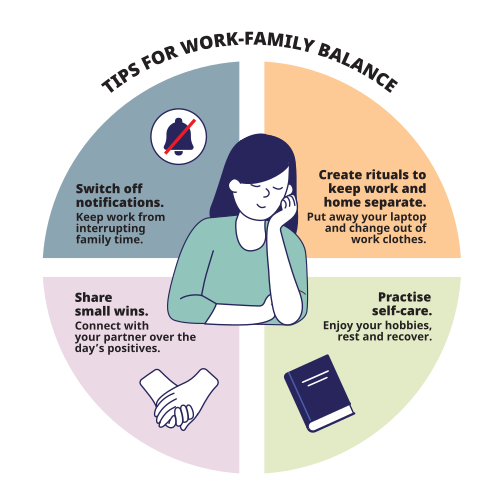
Turning off work notifications at 7PM or putting the phone aside can help with detachment and reduce after hours work creep.
This could include showering or changing out of work clothes the moment you get home or taking the commute time to let your brain switch from ‘Work Mode’ to ‘Family Mode’. This helps you to put away your work identity and step into your role as a spouse or parent.
For those who work from home, the physical act of unplugging your laptop and keeping it in the room or cupboard marks a clear boundary between work and family time. This keeps work out of sight and out of mind. On the other hand, having the laptop on and highly visible is a reminder that work is waiting for you, which can prevent you from fully immersing yourself in family life.
Notably, effective rest does not mean just sitting on the sofa with your phone.
According to research, effective recovery activities are those that we can choose to do, allow us to detach from work, feel competent, and to relax. Playing games with your children, reading a book, spending 15-20 minutes on a hobby, or engaging in activities that lower your heart rate can help you to disengage from work and reduce stress.
Stress can make us feel inadequate, that we are failing both at home and at work.
Taking a moment to acknowledge your emotions and understanding why you are feeling that way, what is causing your stress, can put things into perspective and stop our emotions from spiralling. Take note of the voice you use toward yourself – rather than criticising yourself, treating yourself with the same care and understanding you would offer a good friend can de-activate the stress response and encourage relaxation and emotional recovery.
Finally, remember that you are not alone. Talking to your spouse, friends, or even colleagues can be a good first step to identify ways to manage the load.
For example, a “no-after-hours” rule for non-urgent emails can reduce time-based conflict. While some people might prefer to finish their work late at night, your team can agree to schedule those emails the next morning instead. This simple change respects everyone’s boundaries and protects precious family time. Venting to your spouse, giving each other 10-minutes to decompress when necessary, and sharing positive, small wins with them can boost positive emotions and strengthen your relationship.
And if the stress feels like too much, do reach out to support services such as mindline.sg and Online Counselling on Family Assist. Taking care of your mental health is the best way to take care of your family.