A Singapore Government Agency Website

Looking After Parents Together as a Couple
Keeping your marriage strong while caring for your parents.
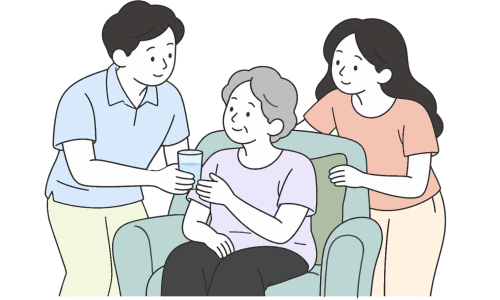

Looking After Parents Together as a Couple
As your parents age, you and your spouse may find yourselves taking on new responsibilities. For example, managing medical appointments, finances, or providing daily care.
This can be a meaningful yet demanding time. It is normal for your lifestyle to be affected by these changes. Many couples find that facing these challenges together brings them closer. By communicating with and supporting each other, you can care for your parents while keeping your marriage strong.

Caring for aging parents can bring big changes to your daily life. It can also be tiring, both physically and emotionally.
Some common challenges include:
- Finding more time for your parents’ care.
- Financial pressure from medical or care needs.
- Emotional stress from watching your parents’ health decline.
- Difficult decisions about your parents’ living arrangements or medical care.
- Balancing your parents’ needs with the needs of your own spouse and children.
These challenges are a normal part of life with ageing parents. It is important for you and your spouse to talk about these stresses openly.

You and your spouse can provide the best care for your ageing parents when both of you feel involved and supported. Try to avoid leaving all the physical and mental work to just one person.
Here are some steps to help you plan your parents’ care together:
- Start by having an honest conversation about each other’s concerns, hopes, and limits.
- Check in with each other regularly to prevent misunderstandings from building up over time.
- Focus on what both of you care about.
- For example, you may both want your parents to be safe and comfortable.
- Sharing your concerns usually makes it easier to find solutions that work for both of you.
- Think about how to share responsibilities in a way that suits both of you. Consider each person’s strengths, available timings, and relationship with the parent. For example:
- One spouse handles medical appointments while the other manages finances.
- One handles your parent’s daily care while the other does the household duties.
- One does check-in visits while the other handles calls.
- One looks up care options while the other looks for activities for the elderly.
- You can learn more caregiving skills, free e-learning resources and training grants through the Agency for Integrated Care (AIC).
You and your spouse may not always agree on how much care to provide or what decisions to make. This is normal and reflects your different family values and experiences. When you disagree, try to understand your spouse's view before sharing your own.
While you care for your parents, make sure to protect time for your marriage. Small, regular moments of connection are important to keep your marriage strong during stressful times.
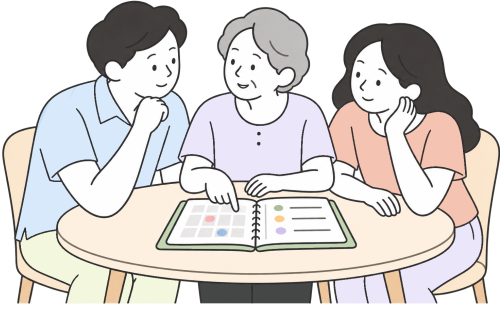
Try to have conversations about your parents’ wishes before urgent decisions need to be made. Involve your siblings in these conversations. Talk about medical care, living arrangements, and end-of-life decisions early. This gives you more time to think things through. It also reduces the stress of needing to make difficult decisions in the moment.
Where possible, include your parents in these conversations. This helps to make sure that their wishes and preferences are respected when the time comes.

Caregiver stress can build up over time. Look out for signs that the stress is getting too much for any of you. For example, arguing often, feeling emotionally disconnected from the people around you, or always feeling tired. These are signs that you may need to change your routines or seek more support.
Some ways to manage stress together:
- Take breaks from caregiving when you can.
- Share household duties to reduce the overall load.
- Do simple activities together to unwind and reduce stress.
- Look into temporary care services, where a trained caregiver looks after your parent for some time, so that you can rest.
You can learn more about managing stress and avoiding caregiver burnout.

If you have siblings or other family members:
- Talk openly about how responsibilities can be shared.
- Be clear about what each person can and cannot do. This helps prevent misunderstandings, and ensures that your parents receive regular care.
- You can find out more about how to share the responsibility of looking after your parents with your siblings.
If caring for your aging parents is significantly affecting your relationship or your own well-being, there are resources that can help:
- Caregiver support groups connect you with others in similar situations and provide coping strategies. You can browse this find a list of online and in-person caregiver support groups.
- Counselling can give you and your spouse a space to work through challenges together and find solutions that work for your situation.
- If you need help finding the right care services for your parents, the Agency for Integrated Care (AIC) can give you advice. Contact AIC by visiting a centre in person, calling the hotline, or sending them an email.
Images in this article are created with AI.